
How to Build Habits Through Planning: Turn Intentions Into Routine
Habits reduce the need to make the same decisions again and again. Learn how planning, consistent cues and simple routines can help turn small behaviours into lasting habits.


Imagine having to negotiate with yourself every night before brushing your teeth.
Should I brush my teeth tonight?
Is now the right time?
Maybe later?
Do I really feel like it?
You would probably get tired of making that decision very quickly.
But most of us don’t go through that process every night. The same is true for eating meals, getting ready in the morning, showering and many other everyday behaviours.
Why?
Because they have become habits.
When a behaviour becomes habitual, we don’t need to make the same conscious decision from scratch every time. The behaviour gradually becomes connected to a particular time, situation or existing routine.
Research on habit formation supports this idea: repeating a behaviour in a relatively consistent context strengthens the association between the context and the action, allowing the behaviour to become increasingly automatic over time.
And this is where planning can do much more than help us write a daily to-do list.
We can use planning to build habits.
Why Do Habits Make Things Easier?
Many things we want to do aren’t particularly difficult.
The difficult part is often starting.
Should I exercise today or tomorrow?
Should I read in the morning or tonight?
Should I cook or order something?
Should I do yoga before breakfast or afterwards?
Every time we have to make the same decision again, it requires some of our attention.
Habits remove part of that repeated decision-making.
If you already know:
I exercise on Monday, Wednesday and Saturday after work
you no longer need to ask yourself every day:
“Should I exercise today?”
Part of that decision has already been made.
The point of building habits isn’t to live without thinking. It is to stop wasting repeated decisions on useful behaviours that we want to perform regularly.
How Can Planning Help Build a Habit?
Writing:
“I want to exercise more”
isn’t really a plan.
It is an intention.
But:
I’ll exercise for 45 minutes on Monday, Wednesday and Saturday after work
is much closer to a plan.
The difference is specificity.
When we decide when, where or after which event a behaviour will happen, the starting point becomes much clearer.
Habit research suggests that both time-based cues, such as a particular time of day, and routine-based cues, such as “after breakfast”, can support habit formation. The important principle is repeated behaviour in a stable context.
1. Don’t Just Decide What You’ll Do — Decide When
One of the simplest changes you can make is turning a vague intention into a specific plan.
Instead of:
I’ll exercise this week
try:
Monday, Wednesday and Saturday after work.
Instead of:
I need to read more
try:
I’ll read for 20 minutes every night before bed.
Instead of:
I want to cook more
try:
I’ll cook dinner at home on Sunday and Wednesday evenings.
A specific time or context removes one more decision from the middle of your day.
2. Attach a New Habit to Something You Already Do
A habit doesn’t always need a particular clock time.
Sometimes an existing part of your routine is a much better cue.
Imagine you already make your bed and brush your teeth every morning.
You could create this sequence:
Make the bed and brush your teeth
↓
10 minutes of yoga
↓
Breakfast
Yoga now has a natural place between two things that already happen every day.
You could do the same with other behaviours:
After dinner → skincare
After making morning coffee → read for 10 minutes
After closing your work laptop → exercise
After brushing your teeth at night → plan tomorrow
The existing behaviour becomes a reminder for the new one.
3. Give Weekly Habits Fixed Days
Not every habit needs to happen every day.
You may want to exercise three times a week.
Meal-prep once a week.
Study a language twice a week.
Or complete a particular task once a month.
The same principle still applies:
Don’t only choose the frequency. Choose the time.
“Exercise three times a week” still leaves plenty of room for negotiation.
But:
Saturday after work
Monday after work
Wednesday after work
is much clearer.
Exercise is no longer something you need to “find time for” somewhere in the week.
It already has a place.
4. Make the Habit Small Enough to Start
A common mistake is making a new habit too ambitious from the beginning.
Someone who rarely exercises decides:
“From tomorrow, I’ll exercise for an hour every day.”
Someone who hasn’t read for months decides:
“I’ll read for an hour every night.”
That enthusiasm might work for a few days, but maintaining such a large change is harder.
Instead, start smaller:
10 minutes of yoga.
10 pages of a book.
15 minutes of tidying.
One home-cooked meal a week.
Five minutes planning tomorrow.
The first goal isn’t to do the maximum possible amount.
It is to make repetition happen.
Because habits aren’t built from one huge decision.
They are built from repeated behaviours.
5. Put the Habit in Your Plan — Even If It Repeats
You might think:
“I already know Monday is my exercise day. Why write it down?”
Because until a behaviour genuinely feels like a natural part of your life, seeing it in your plan can act as a useful reminder.
This matters particularly in the early stages.
If you’re trying to build a new habit, treat it like any other important part of your daily or weekly planning.
Exercise doesn’t have to be something you do only if nothing else comes up.
Reading doesn’t have to wait until “if I have time tonight”.
If something matters to you, give it space.
If you don’t yet have a simple daily planning system, start with “Daily Planning: How to Write a Plan You’ll Actually Follow.”
6. Ticking Things Off Isn’t Just Satisfying
I’ve been writing down my tasks and ticking them off for years.
And yes, ticking a completed task still feels surprisingly good.
But when you’re building a habit, those ticks can tell you something else:
Did the behaviour actually happen as often as you thought it did?
If your goal is to exercise three times a week, you can look back at the end of the month and see how consistently it really happened.
That information can help you adjust your plan.
Maybe Monday, Wednesday and Saturday weren’t the best days.
Perhaps mornings work better than evenings.
Or perhaps three sessions a week are too much right now.
Your plan isn’t there to judge you.
It gives you information you can use to create a better plan.
How Can a Planner Notebook Help Build Habits?
If you enjoy writing by hand, a planner notebook can turn an intention into something visible.
At the beginning of the week, you can give exercise, reading, cooking or another habit a specific place in your schedule.
Then tick it off when it happens.
Over time, those small repeated ticks show that something you once merely intended to do is becoming a regular part of your life.

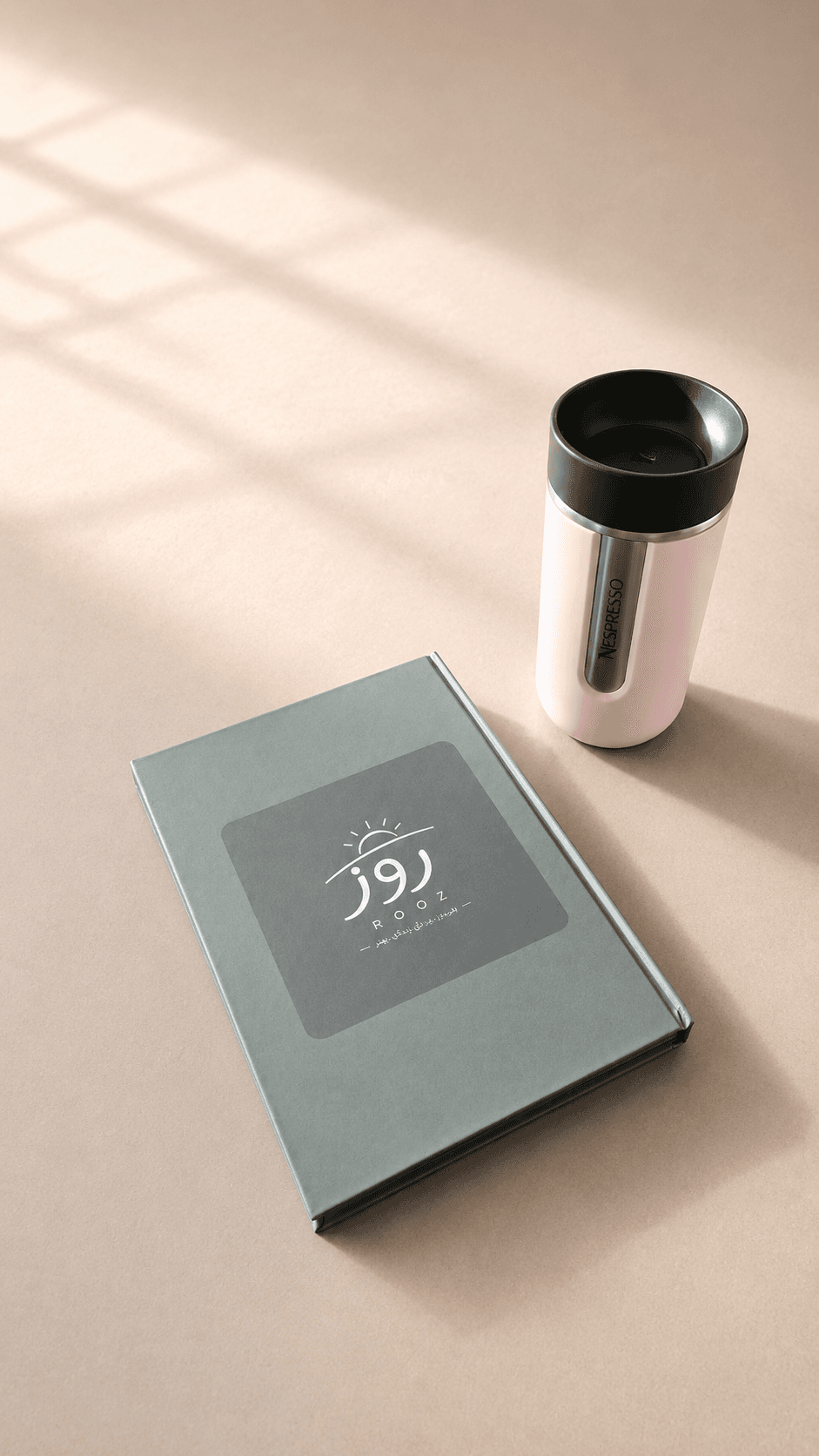
If planning on paper works well for you, the Rooz Planner Notebook gives your daily plans, priorities and the habits you want to make time for one consistent place.
What If You Prefer Digital Planning?
Some people prefer to have their plan with them on their phone.
This can work particularly well for habits that happen throughout the day because your plan is almost always accessible.
You can include exercise, reading, yoga, skincare or any other behaviour alongside the rest of your daily tasks and tick it off when it’s complete.

With the Rooz Planner App, the things you want to turn into routines can stay alongside the rest of your daily plan, where you can see and track them.
And if something doesn’t get done that day, it doesn’t have to disappear simply because the date changes. Unticked Rooz tasks automatically carry into the next day so you can decide what to do with them.
You can also link here to “Don’t Put Off Until Tomorrow What You Can Do Today” for more on handling unfinished tasks.
7. Missing One Day Doesn’t Mean You Should Give Up
One of the easiest traps to fall into is thinking:
“I missed today, so the plan is ruined.”
Imagine you planned to exercise on Monday, Wednesday and Saturday and you miss Wednesday.
You don’t need to abandon the plan and wait for a fresh start next week.
Return to it on Saturday.
Habit building doesn’t need to look perfect.
What matters is returning to the behaviour instead of allowing one missed day to become a reason to stop completely.
Practical Habit-Building Examples
If You Want to Exercise
Instead of:
“I need to exercise more.”
Write:
Monday, Wednesday and Saturday after work: 45 minutes of exercise.
If You Want to Do Yoga Every Day
Instead of:
“Yoga every day.”
Write:
Every morning, after making my bed and brushing my teeth, before breakfast: 10 minutes of yoga.
If You Want to Read More
Instead of:
“I should read more.”
Write:
Every night after my skincare routine: 20 minutes of reading.
If You Want to Cook More
Write:
Sunday and Wednesday at 7 pm: cook dinner at home.
If You Want a Consistent Skincare Routine
Write:
Every night after brushing my teeth and before going to bed: skincare routine.
The common idea is simple:
The behaviour is no longer floating somewhere in your intentions.
It has a specific place in your life.

For me, planning has never only been about doing more work. A bigger part of it is making room for the things I want to remain part of my life.
Exercise, self-care, work, cooking, reading and even rest can easily disappear if they are always waiting for “spare time”.
When I give them a specific place in my plan, they stop being things I simply hope to do.
They become part of how I live.
Start With One Habit
You don’t need to finish this article and immediately create plans for ten new habits.
Choose one.
Reading.
Exercise.
Yoga.
Planning tomorrow.
Skincare.
Then ask yourself:
What exactly am I going to do?
Which days?
When?
After what existing activity?
Then put it in your plan.
For example:
Every night after brushing my teeth, I’ll read for 10 minutes.
Now you no longer have a vague goal.
You have a specific behaviour with a specific place in your day.
Then repeat it.
Again.
And again.
Until one day you notice that before starting, you no longer ask yourself:
“Should I do it?”
You simply do.
And perhaps that’s the moment when something stops being just another item on your plan and starts becoming part of your life.

Don’t Put Off Until Tomorrow What You Can Do Today , But If You Do, Don’t Lose It
Not everything on today’s list gets finished today. Learn how to handle unfinished tasks and how Rooz Planner automatically carries unticked tasks into the next day.
Daily Planning: How to Write a Plan You’ll Actually Follow
How can you create a daily plan you’ll actually follow? From prioritisation and time management to building better habits, this article explores a simple and realistic approach to daily planning.